EU Digital Sovereignty and GAIA-X: Building Europe's Cloud Future
The European Digital Sovereignty Imperative
For decades, European enterprises have relied on American cloud providers—AWS, Azure, Google Cloud—for critical infrastructure. While these platforms are technically excellent, they create strategic dependencies that European policymakers increasingly view as risks to:
- Data sovereignty: Where is European data stored, processed, and governed?
- Economic independence: Can Europe compete if cloud infrastructure is controlled elsewhere?
- Regulatory compliance: How can EU law apply to non-EU platforms?
- Innovation capacity: Can European companies build next-generation digital services?
Enter GAIA-X: An ambitious initiative to create a federated, sovereign cloud infrastructure for Europe.
What is GAIA-X?
GAIA-X is not a single cloud provider—it’s a federation framework enabling European cloud providers, data centers, and service providers to collaborate while maintaining sovereignty.
Core Principles
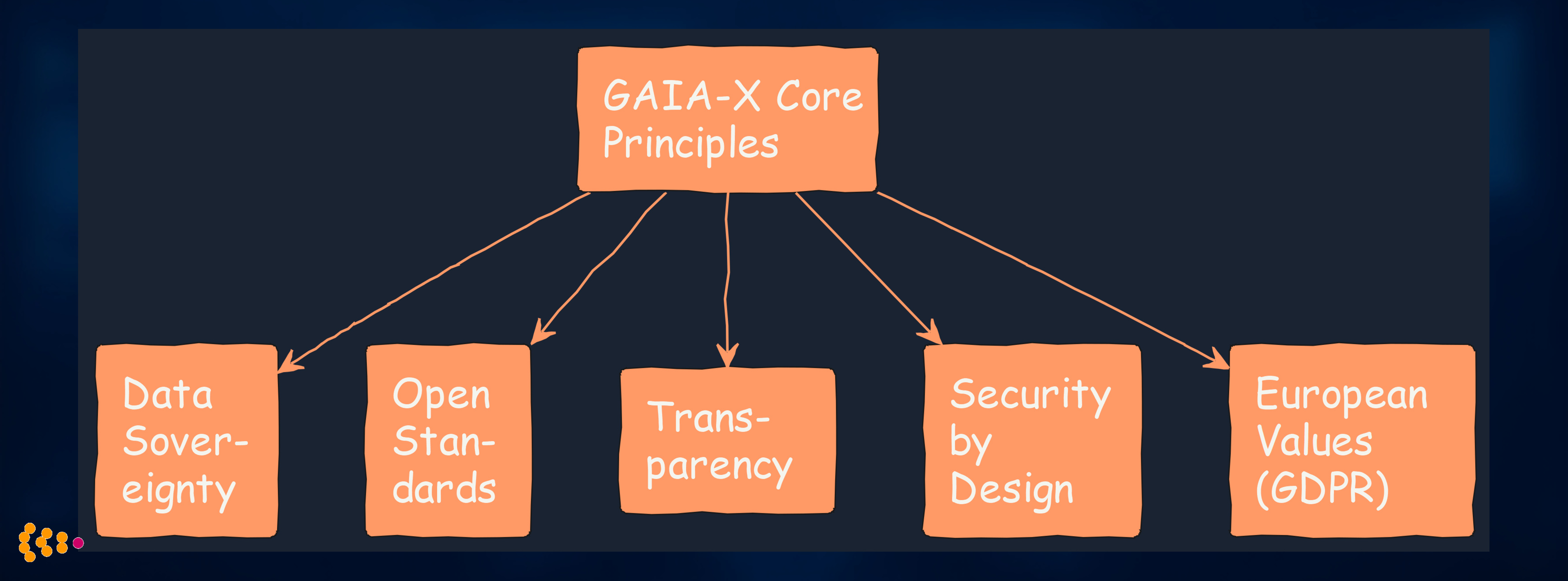
- Data owners control where data is stored and processed
- EU law applies throughout the data lifecycle
- No unilateral access by non-EU authorities (Cloud Act, FISA)
2. Interoperability
- Open standards prevent vendor lock-in
- Federated services can combine multiple providers
- Portability between GAIA-X-compliant clouds
3. Transparency
- Clear documentation of data location, processing, and governance
- Self-description of services (what, where, how)
- Auditable compliance with EU regulations
4. Security by Design
- Zero-trust architecture
- Encryption at rest and in transit
- Regular security audits and certifications
5. European Values
- GDPR compliance built-in
- Respect for fundamental rights (privacy, data protection)
- Democratic oversight and governance
GAIA-X Architecture: How It Works
The Federation Model
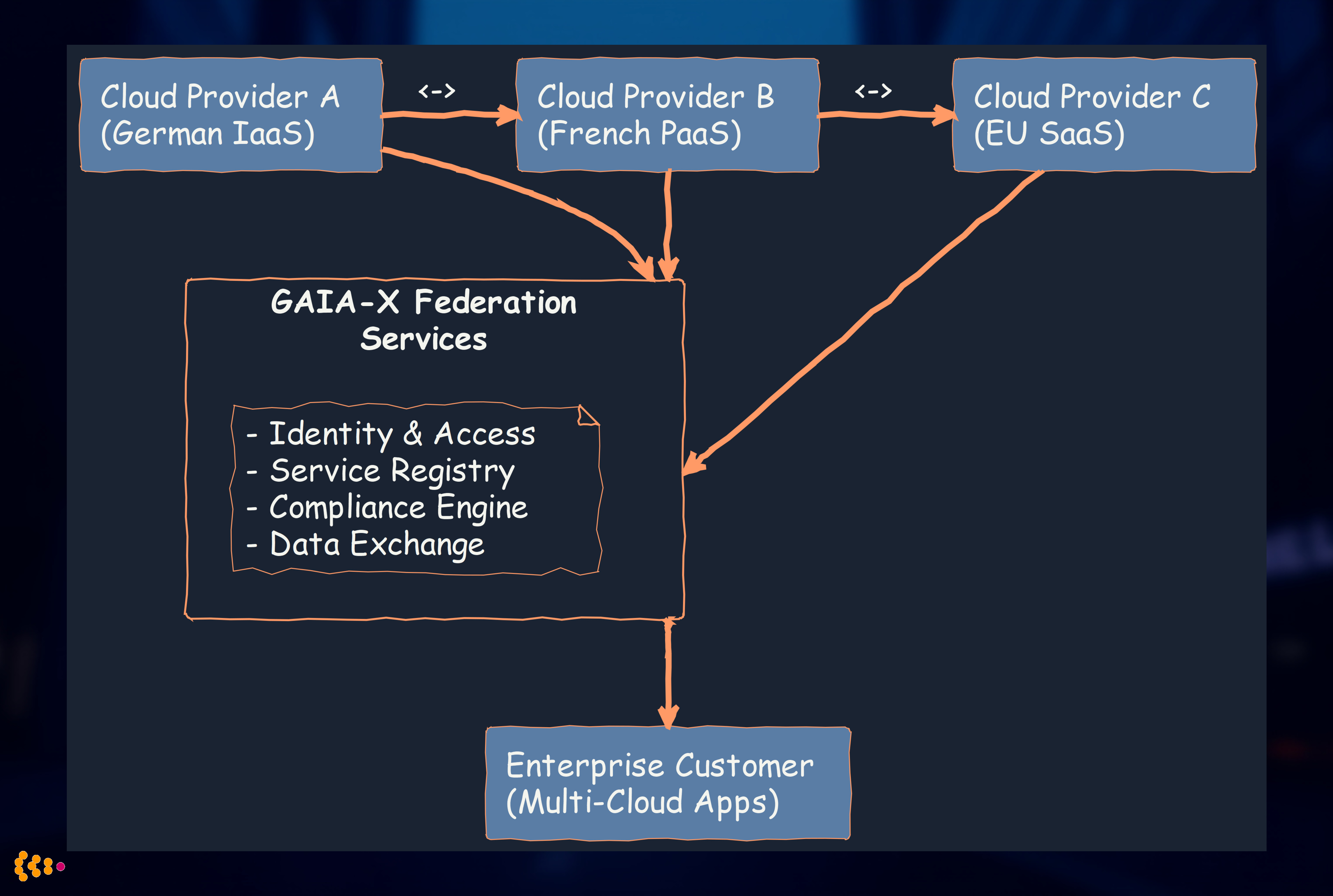
Key Components:
- Federated Catalog: Registry of available services, their capabilities, and compliance status
- Identity & Access Management: Federated identity across providers
- Data Exchange Protocols: Standardized APIs for data sharing
- Compliance Framework: Automated verification of regulatory requirements
- Sovereign Infrastructure: EU-based data centers and network infrastructure
GAIA-X in Practice: Use Cases
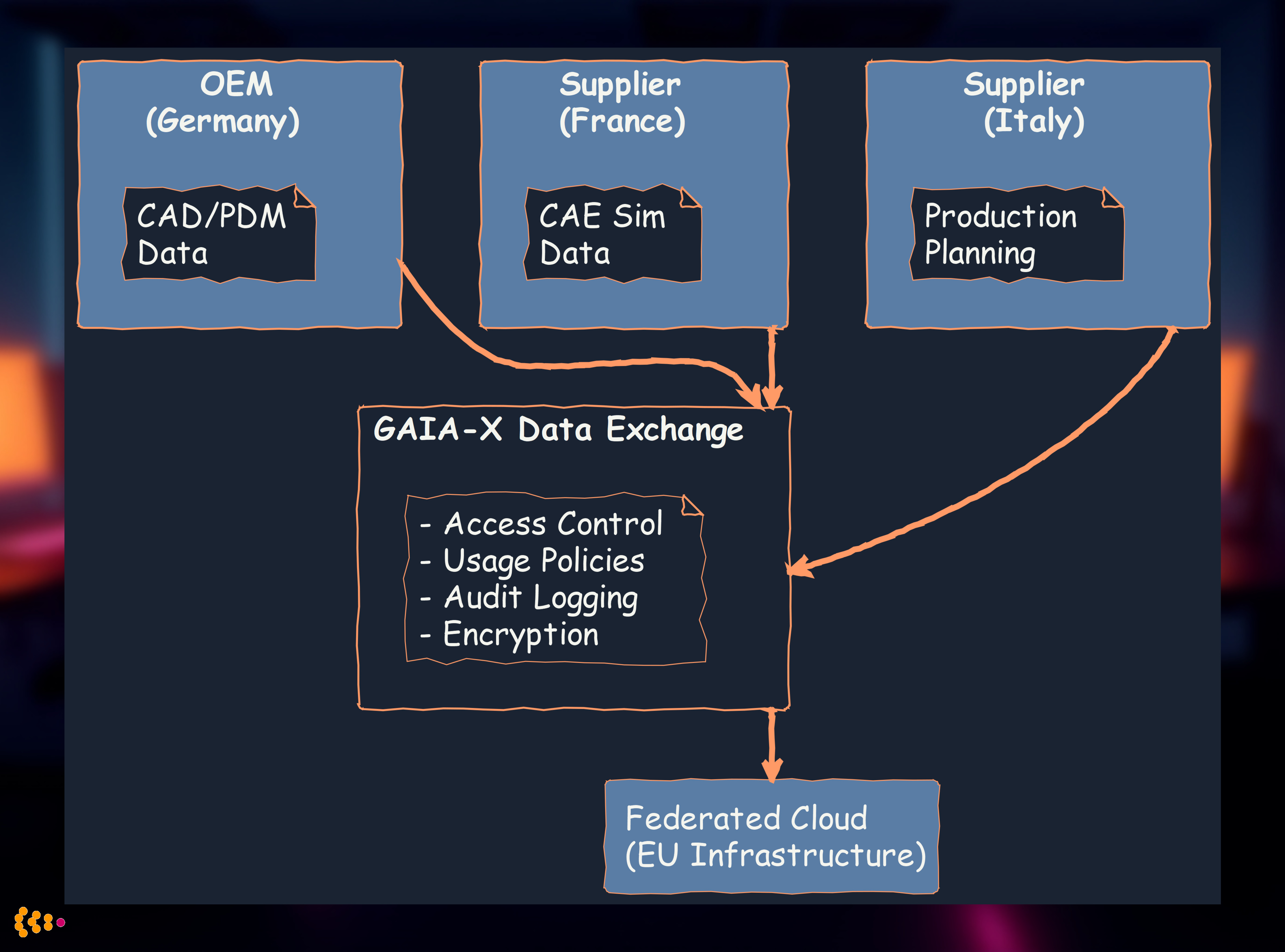
1. Manufacturing Data Spaces
Challenge: Automotive manufacturer needs to share design data with suppliers across EU while maintaining IP protection.
GAIA-X Solution:
Benefits:
- Data stays in EU: Compliance with data residency requirements
- Granular access control: OEM controls who sees what
- Usage policies: “View only, no download” for sensitive IP
- Audit trail: Complete log of data access for compliance
2. Healthcare Data Analytics
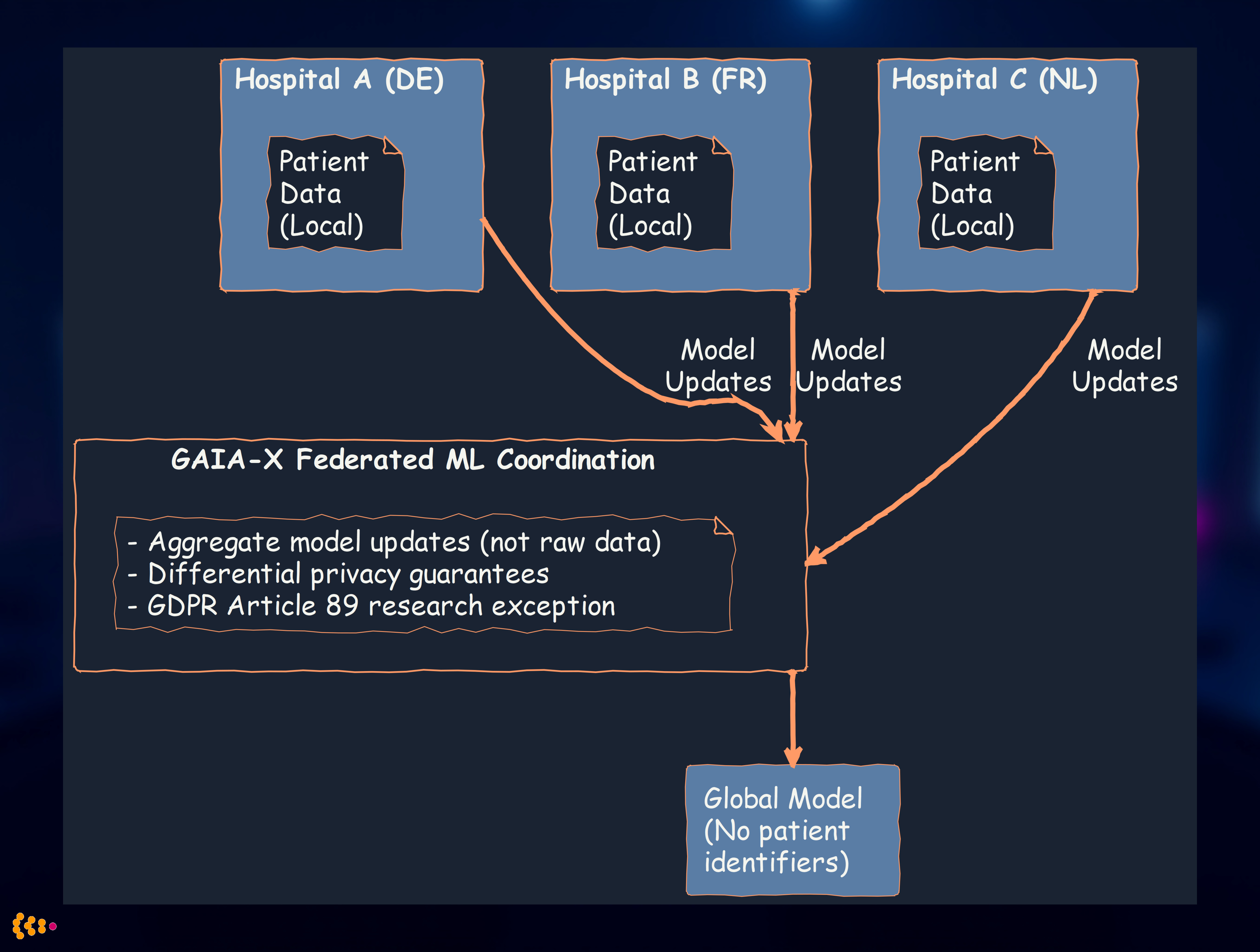
Challenge: Research consortium needs to analyze patient data across multiple EU hospitals without centralizing sensitive data.
GAIA-X Federated Learning:
Key Advantages:
- Data never leaves hospitals: GDPR compliance by design
- Federated learning: Train models without centralizing data
- Privacy preserving: Differential privacy, secure aggregation
- EU regulatory framework: Article 89 research exemption
EU Regulatory Landscape: The Compliance Stack
European enterprises must navigate a complex regulatory environment:
The Three Pillars
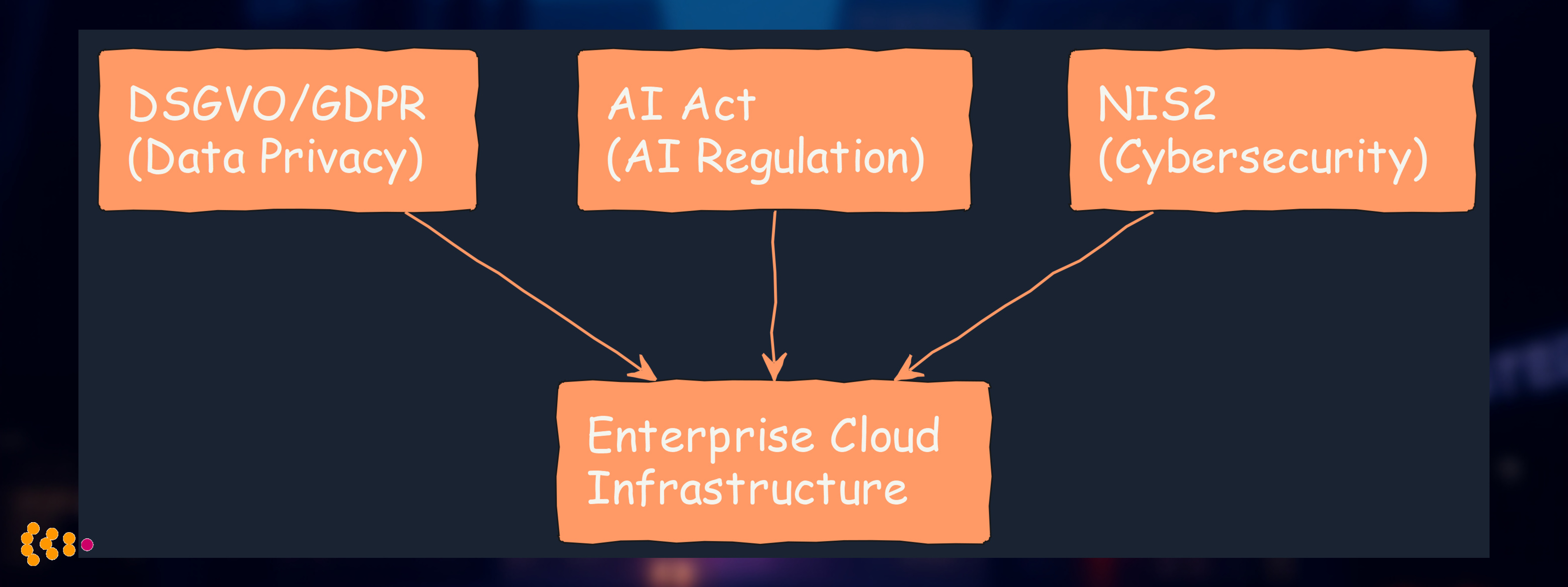
1. DSGVO/GDPR (Data Protection)
Key Requirements for Cloud Infrastructure:
- Data Processing Agreements (DPA): Written contracts with cloud providers
- Data Protection Impact Assessments (DPIA): For high-risk processing
- Right to Data Portability: Export data in machine-readable format
- Data Breach Notification: 72-hour reporting requirement
GAIA-X Advantage:
- Built-in GDPR compliance framework
- Automated DPA templates
- Standardized data export formats
- Breach notification infrastructure
2. EU AI Act (Artificial Intelligence Regulation)
Risk-Based Approach:
| Risk Level | Examples | Requirements |
|---|---|---|
| Unacceptable | Social scoring, mass surveillance | Banned |
| High-Risk | Hiring AI, credit scoring, critical infrastructure | Strict compliance, human oversight, audit trails |
| Limited Risk | Chatbots, AI-generated content | Transparency obligations |
| Minimal Risk | Spam filters, game AI | No specific requirements |
GAIA-X Compliance Features:
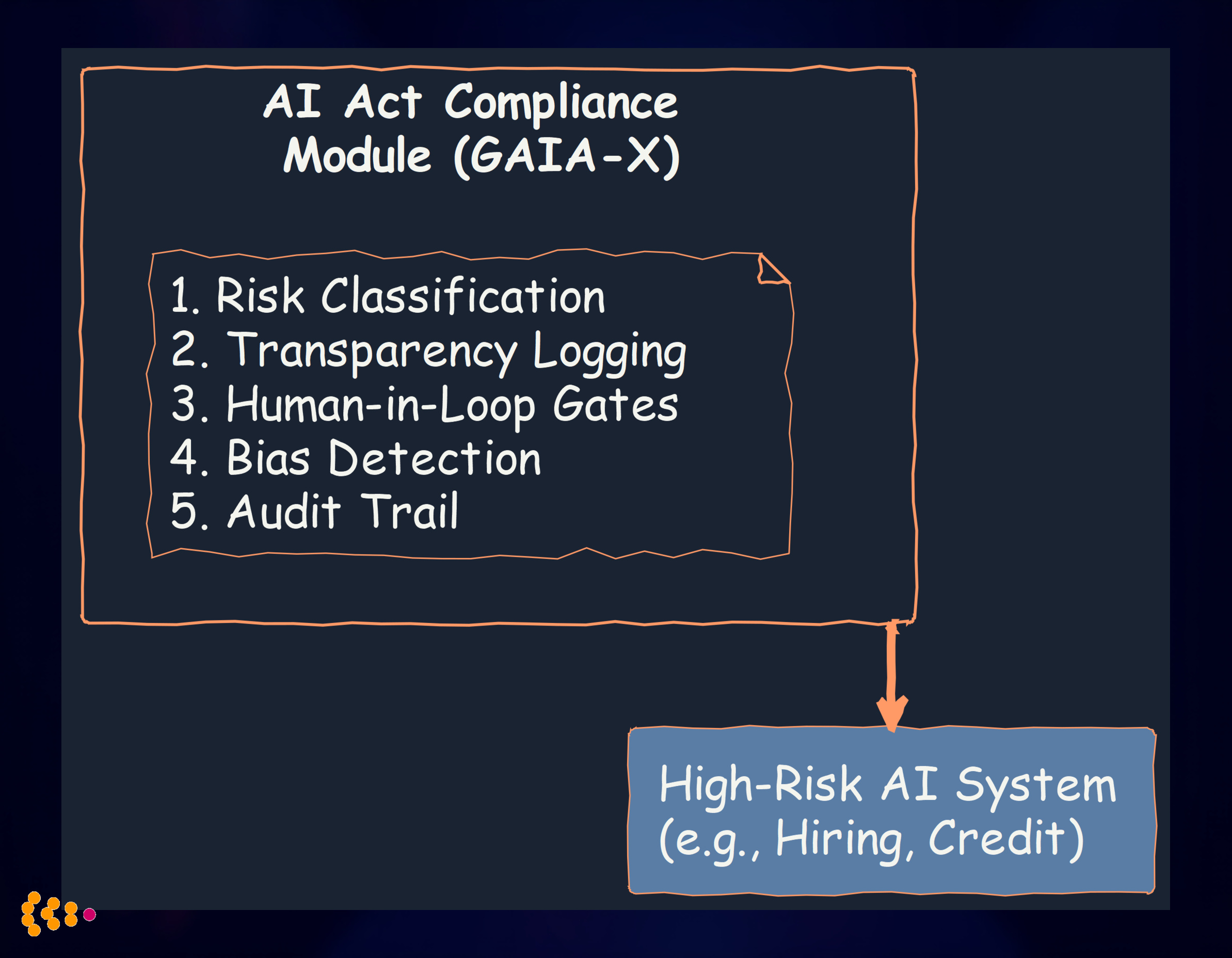
Our Approach:
- AI inventory: Catalog all AI systems, classify by risk
- Transparency documentation: Model cards, dataset documentation
- Bias testing: Regular audits for discriminatory outcomes
- Human oversight: Critical decisions require human review
3. NIS2 (Network and Information Security Directive)
Who’s Affected:
- Essential entities: Energy, transport, banking, healthcare, cloud providers
- Important entities: Postal services, waste management, manufacturing
Requirements:
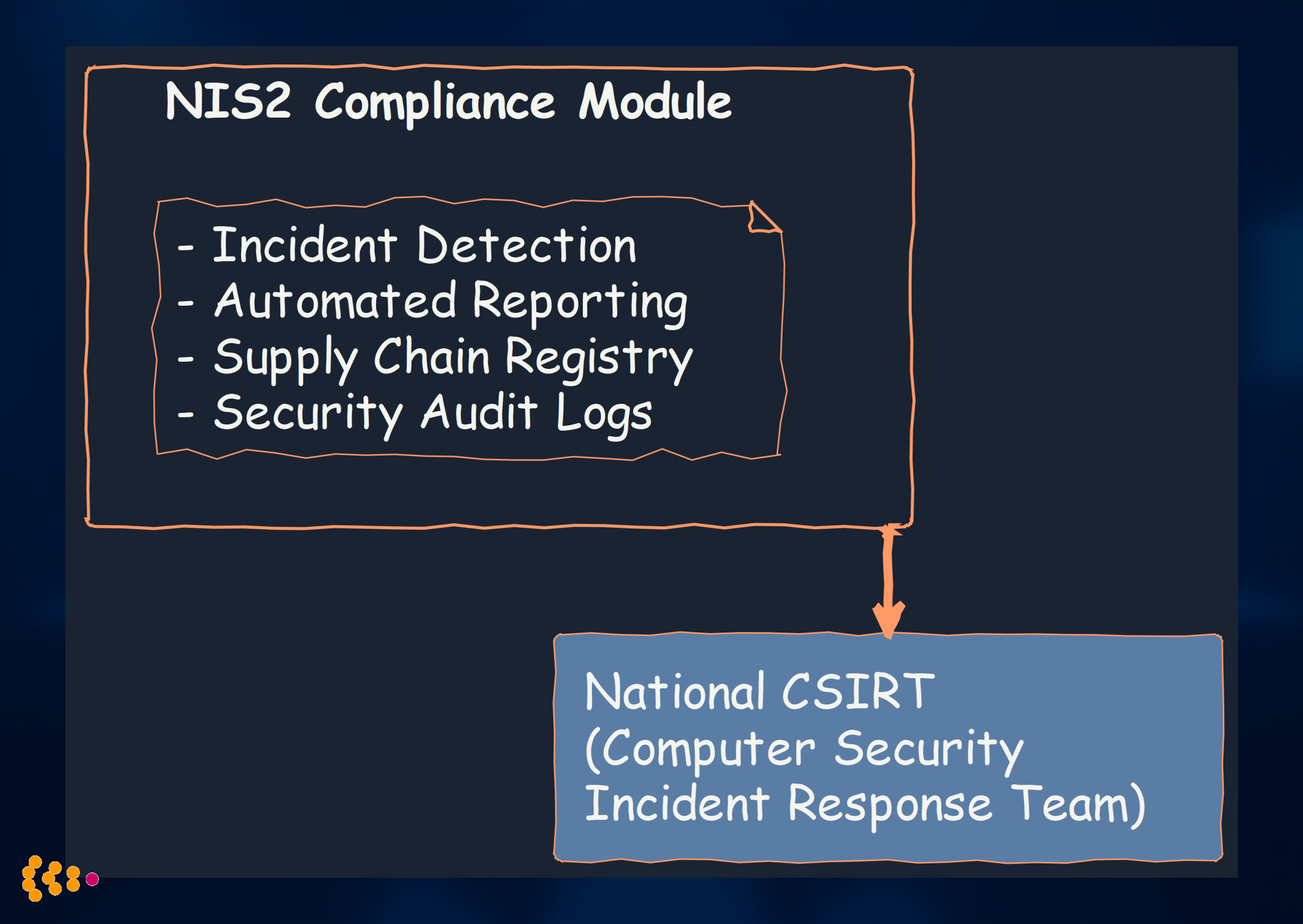
- Risk management measures: Security policies, incident handling
- Incident reporting: 24-hour early warning, 72-hour detailed report
- Supply chain security: Assess third-party vendor risks
- Cybersecurity training: Regular employee education
GAIA-X NIS2 Support:
Building on GAIA-X: Practical Steps for Enterprises
Phase 1: Assessment (Months 1-2)
1. Data Inventory
- Where is your data currently stored?
- Which data is subject to GDPR, sector-specific regulations?
- What are your data residency requirements?
2. Vendor Analysis
- Which cloud providers are GAIA-X compliant?
- What’s the migration path from current infrastructure?
- Cost comparison: GAIA-X vs. hyperscalers
3. Regulatory Gap Analysis
- GDPR compliance status
- AI Act risk classification
- NIS2 obligations
Phase 2: Pilot (Months 3-6)
Select Low-Risk Workload:
- Non-critical application
- Limited data sensitivity
- Clear success criteria
GAIA-X Pilot Architecture:
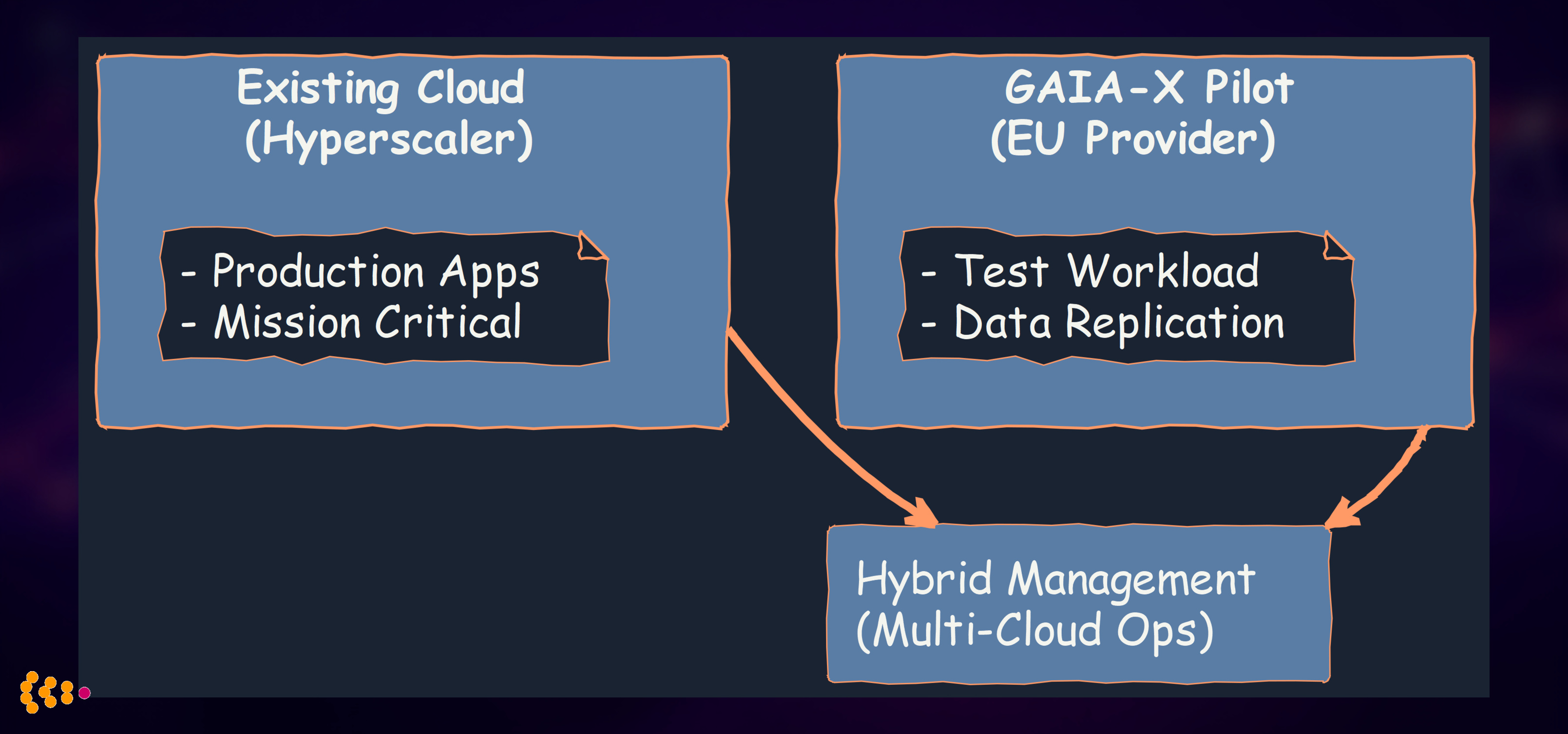
Key Learnings:
- Performance: Latency, throughput vs. hyperscalers
- Cost: TCO comparison (compute, storage, egress)
- Compliance: GDPR, AI Act, NIS2 verification
- Interoperability: Integration with existing systems
Phase 3: Production Migration (Months 7-18)
Migration Strategy:
- Lift-and-Shift: Move workloads as-is (fastest)
- Re-platforming: Optimize for GAIA-X (better performance)
- Re-architecting: Redesign for federated cloud (most benefit)
Our Recommendation: Hybrid approach based on application criticality
GAIA-X Providers: The Ecosystem
Infrastructure Providers
1. Sovereign Cloud Stack (SCS)
- Open-source cloud infrastructure
- Fully GAIA-X compliant
- Used by German public sector (Bundescloud)
2. OVHcloud (France)
- European hyperscaler
- GAIA-X founding member
- Broad service portfolio (IaaS, PaaS)
3. T-Systems (Germany/Telekom)
- Enterprise cloud solutions
- Strong SAP integration
- German data center footprint
4. Scaleway (France/Iliad)
- Developer-friendly cloud
- Competitive pricing
- Paris region focus
Platform & SaaS Providers
Data Intelligence Platform: Catena-X (automotive data space)
Manufacturing: Industrial Data Space (IDS)
Healthcare: European Health Data Space (EHDS)
Challenges and Criticisms
1. Complexity
Problem: GAIA-X framework is complex, slowing adoption
Response:
- Simplified onboarding for SMEs
- Reference implementations
- Certification streamlining
2. Performance & Cost
Problem: EU cloud providers lag hyperscalers in scale and pricing
Response:
- Federation enables combined scale
- Focus on compliance value, not just cost
- Public funding for infrastructure buildout
3. Non-EU Participation
Problem: Some GAIA-X members are US cloud providers (Microsoft, AWS)
Response:
- Layered sovereignty model: EU-controlled governance even with non-EU tech
- Focus on interoperability, not protectionism
- Clear rules for non-EU participants
The Future: Where GAIA-X is Heading
1. Sector-Specific Data Spaces
Manufacturing X: Automotive industry data exchange
Agro-Gaia: Agriculture and food sector
Health-X: Federated health data analytics
2. Integration with EU Digital Decade
EU Digital Targets for 2030:
- 75% of EU companies using cloud, AI, big data
- 10,000 climate-neutral edge nodes in EU
- Secure European quantum communication infrastructure
3. Global Sovereignty Alliances
Partnerships:
- Japan: Digital trade agreements, data governance collaboration
- India: Data localization alignment
- ASEAN: Reciprocal data sovereignty frameworks
HSEC’s Role: Building GAIA-X Solutions
Our Services
1. GAIA-X Readiness Assessment
- Evaluate current infrastructure vs. GAIA-X requirements
- Identify data sovereignty gaps
- Roadmap for GAIA-X adoption
2. Compliance Implementation
- GDPR, AI Act, NIS2 compliance automation
- Audit trail and reporting infrastructure
- Data governance frameworks
3. Migration Engineering
- Hybrid cloud architecture (GAIA-X + existing infrastructure)
- Data replication and synchronization
- Application modernization for federated cloud
4. Federated Application Development
- Multi-cloud microservices
- GAIA-X identity integration
- Sovereign data analytics platforms
Lessons Learned: EU Digital Sovereignty in Practice
What Works
✅ Start with data inventory: Know what you have before migrating
✅ Pilot before production: Validate assumptions with real workloads
✅ Hybrid approach: GAIA-X doesn’t mean abandoning hyperscalers immediately
✅ Compliance first: Build regulatory compliance into architecture
✅ Leverage ecosystems: Join sector-specific data spaces
What Doesn’t Work
❌ “GAIA-X will solve everything”: It’s infrastructure, not a silver bullet
❌ Ignoring cost: EU cloud may be more expensive—justify with compliance value
❌ Waiting for “complete” GAIA-X: Ecosystem is evolving, start now
❌ Vendor lock-in 2.0: Avoid locking into single GAIA-X provider
Conclusion
EU digital sovereignty is not about protectionism—it’s about strategic autonomy: ensuring European businesses can innovate, compete, and comply with European values in the digital economy.
GAIA-X provides the framework, but success requires:
- Clear business case: Compliance, resilience, innovation
- Pragmatic migration: Hybrid cloud, phased approach
- Active participation: Shape GAIA-X through feedback and contribution
- Long-term commitment: Digital sovereignty is a multi-year journey
After evaluating GAIA-X for European clients, we believe the initiative is essential for regulated industries (healthcare, automotive, finance) and valuable for any enterprise taking data sovereignty seriously.
The question is not “if” but “when” and “how” to embrace EU digital sovereignty.
Related Initiatives: GAIA-X, Sovereign Cloud Stack, Catena-X, Industrial Data Space, European Health Data Space
Regulations: GDPR (DSGVO), EU AI Act, NIS2 Directive, Data Governance Act, Digital Markets Act (DMA), Digital Services Act (DSA)
Related Posts:
- Machine Learning and Neural Networks (AI Act compliance for ML systems)
- Modern Data Architecture (Sovereign data platforms)
- Healthcare & Pharmaceutical Solutions (GDPR compliance in healthcare)
About: HSEC supports European enterprises in navigating digital sovereignty, GAIA-X adoption, and EU regulatory compliance (GDPR, AI Act, NIS2). Our expertise spans cloud migration, compliance automation, and federated application development.